
How Much Portrait Time Do You Really Need on a Wedding Day?
Allow approximately 60–90 minutes for the main couple portraits and up to 30 minutes for a separate evening session, but divide that time where possible. Family and group photographs commonly need 20–40 minutes. A portrait plan should create variety without keeping the couple away from their guests until they are tired.
The short answer
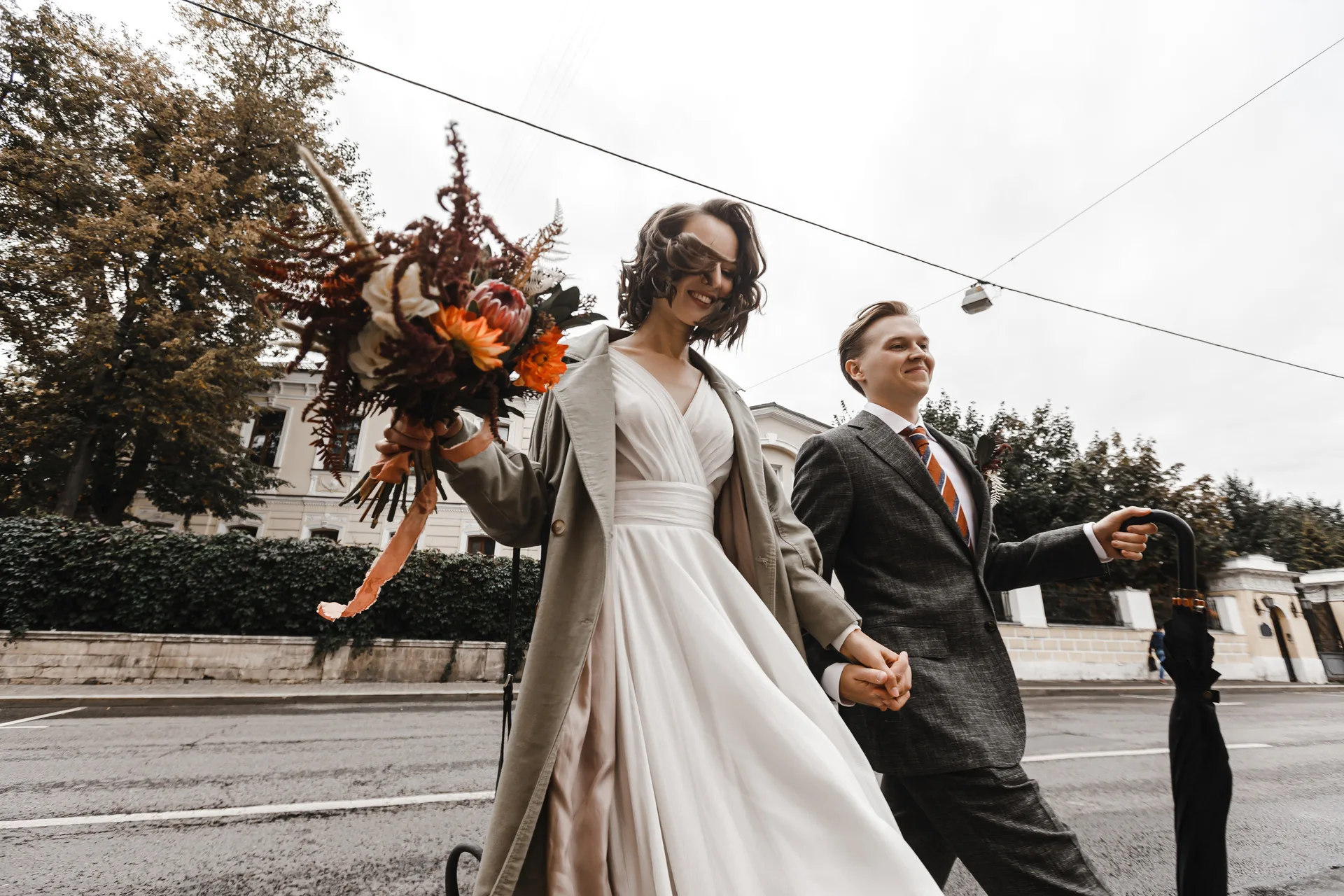
For the main couple portraits, plan approximately 60–90 minutes before or after the ceremony. A separate evening session can use up to 30 minutes, although it may be much shorter when the light, dinner and distance from guests require it. Family and group photographs usually need 20–40 minutes.
Those numbers are planning limits, not instructions to pose for two uninterrupted hours. I prefer dividing portrait work into shorter sections. People remain more relaxed, facial expressions stay alive, and the photographs gain natural changes of clothing, location, light and energy.
| Portrait type | Planning allowance | Best use |
|---|---|---|
| Individual portraits | 10–15 minutes within preparations | Classic photographs of each partner before the ceremony |
| Main couple session | Part of the 60–90 minutes total | A focused nearby route before or after the ceremony |
| Family and groups | 20–40 minutes | Complete group, parents, grandparents and requested combinations |
| Evening session | Up to 30 minutes | Different light, atmosphere and movement without repeating the main session |
The purpose is not to maximise the number of minutes spent in front of the camera. It is to create a varied set while protecting the experience of the wedding.
Divide the time instead of disappearing
A single long portrait session often looks efficient in a spreadsheet. In practice, the couple can become physically and mentally tired. Expressions narrow, posture becomes less natural and every new location begins to feel like another task.
A divided structure works better:
- During preparations: short individual portraits when clothing and hair are fresh.
- Before or after the ceremony: the main couple sequence near the actual route.
- After congratulations: family groups while everybody is already together.
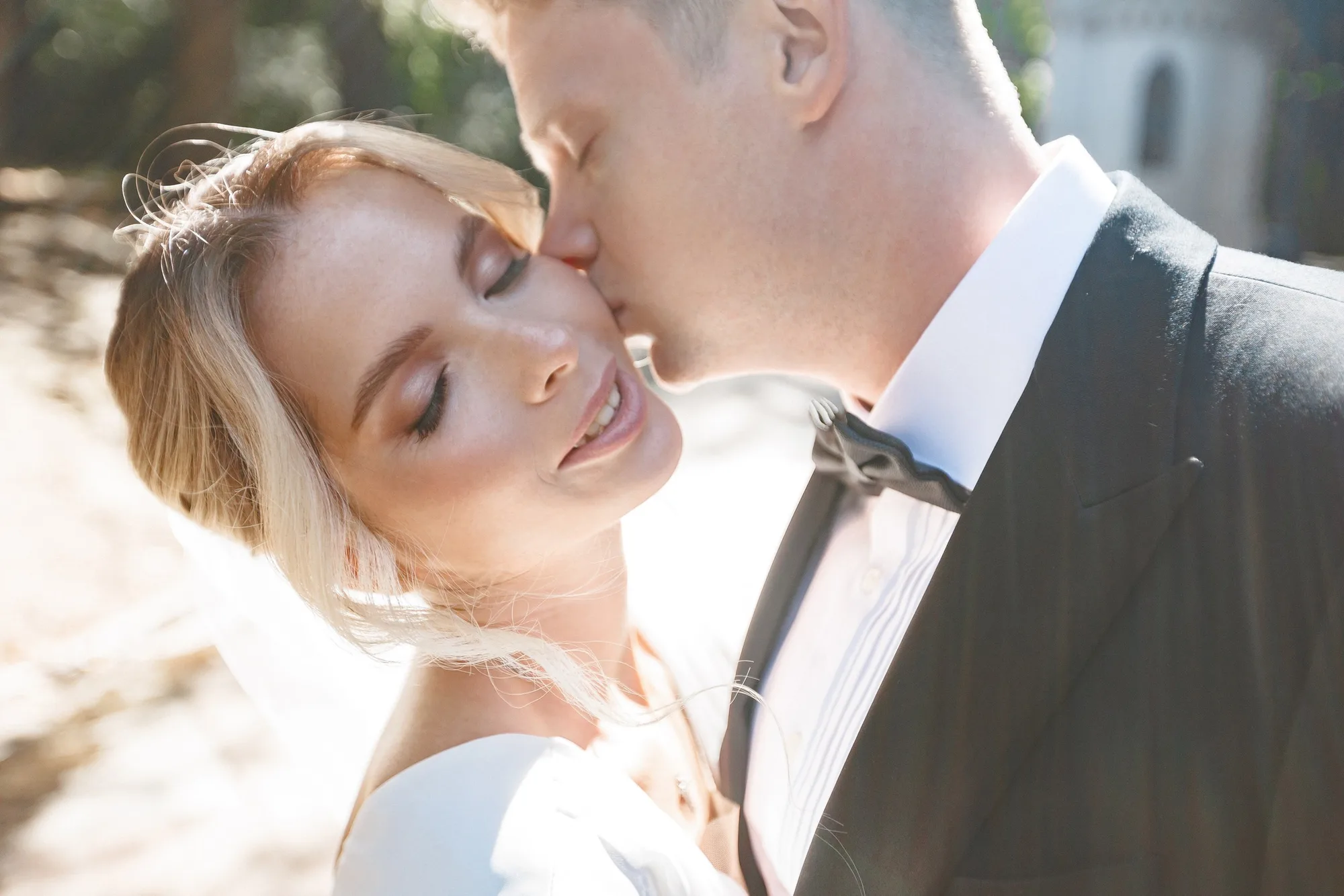
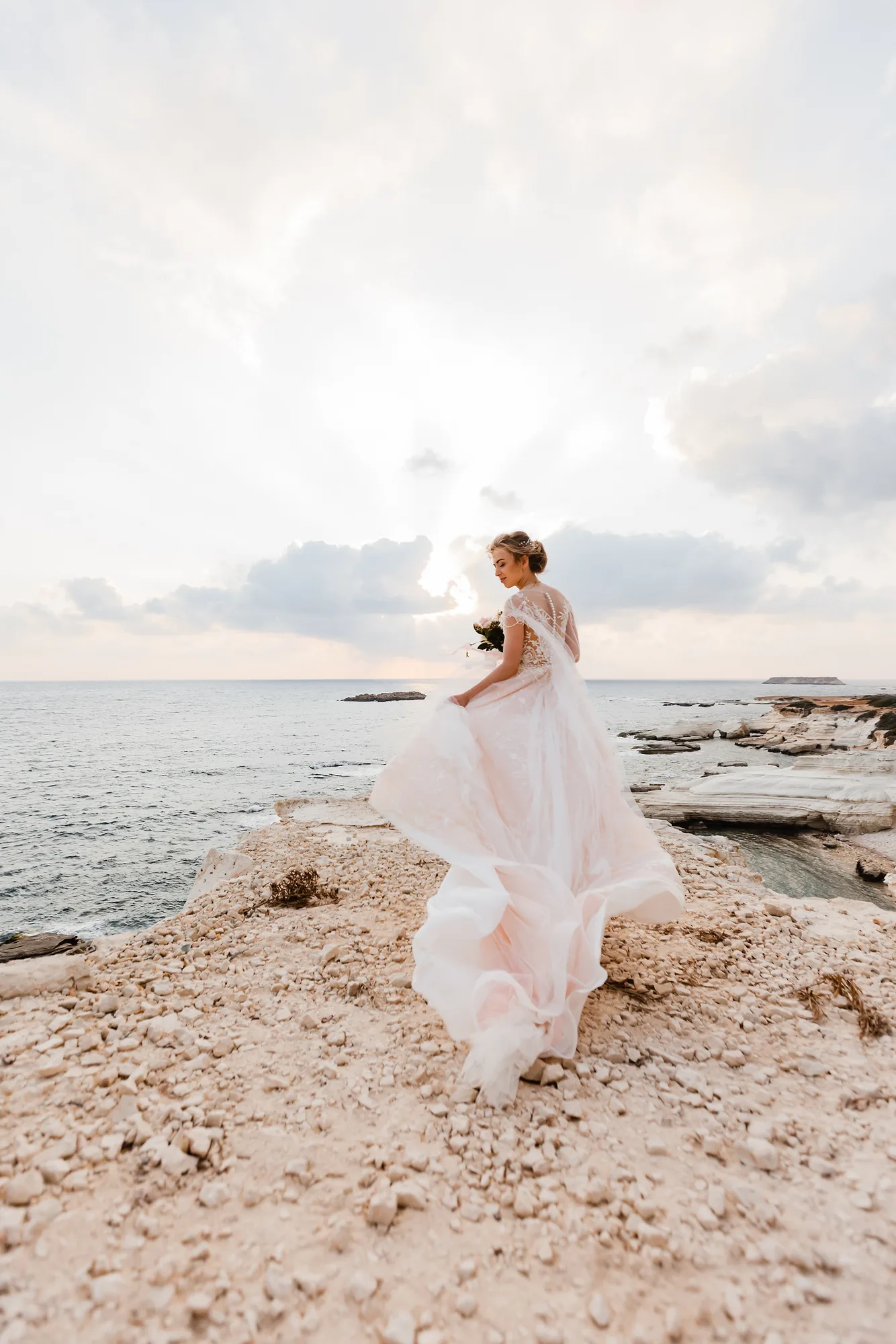
- Near evening light: a shorter session with a different mood.
- During the reception: occasional documentary portraits created from real movement rather than leaving for another planned shoot.
This approach also protects against delay. If the main session becomes shorter because the ceremony started late, the gallery still contains individual portraits and a later opportunity. If evening weather changes, the main set already exists.
A practical portrait timeline
The following example distributes portrait time across a wedding without removing the couple for one continuous block.
| Moment | Duration | What happens |
|---|---|---|
| Final preparations | 10–15 minutes each | Individual portraits, clothing and a few calm frames before leaving |
| First look, if planned | 10–15 minutes | The meeting first; simple portraits only after the reaction has unfolded |
| Main session | 30–45 minutes | Couple walking, classic full-length and close portraits, one nearby setting |
| Family groups | 20–40 minutes | Complete group and ordered combinations after congratulations |
| Evening light | 10–30 minutes | Different atmosphere, not a repetition of every earlier pose |
This fits within the broader 60–90 minutes couple allowance while leaving room for the day to move. If the couple wants an hour and a half before the ceremony and another half hour at sunset, that is possible, but it should be a deliberate priority rather than the default imposed on every wedding.
Before or after the ceremony?
Before the ceremony can reduce pressure later and let the couple join guests after congratulations. It works well when both partners are ready on time and are comfortable seeing each other before the formal entrance.
After the ceremony keeps the traditional first meeting but competes with congratulations, family groups and cocktail time. The portrait location should be close so the couple does not disappear immediately after inviting people to travel and celebrate with them.
There is no universal winner. The correct position follows the ceremony tradition, route and people.
Family and group photographs
Allow 20–40 minutes for family and guest groups. The exact time depends on the number of people, walking distance, age and mobility, not only the number of lines in a list.
For an intimate or micro-wedding, I prefer to photograph the couple with every guest. These photographs become more important over time, and the smaller group makes it possible to preserve many combinations. “More is better” works when the list is organised and the schedule honestly contains the time.
Prepare groups in an order that reduces movement:
- Everyone together.
- Couple with both sets of parents.
- Couple with one family, then the other.
- Grandparents and anyone who should not stand for long.
- Siblings and immediate family.
- Friends and requested smaller combinations.
Ask one person from each family to help call names. The photographer cannot know whether an absent person is a cousin who must be found or a venue employee standing nearby. Helpers shorten the process without reducing the number of photographs.
Choose one stable location with enough space, even light and a clean route for people entering and leaving. Moving the entire guest list between several backdrops creates delay without adding the same value as completing the combinations calmly.
Golden hour, midday and heat
Golden hour is useful, but portraits do not have to control the whole wedding around it. The light may be warm and lower, yet the published sunset does not tell the complete story: mountains, buildings, trees or the venue itself can block it earlier. Dinner and speeches may also matter more than leaving at the only moment when guests are sharing something important.
Use evening light as a separate short opportunity, not a guarantee. It can include portraits, movement and a walk, rather than only formal posing.
Midday light
Some locations work at midday because architecture, trees or covered spaces create usable shade. Hard sun can also produce a deliberate high-contrast portrait for a short period. The problem is not the clock by itself; it is forcing a long ceremony or walk into exposed heat with nowhere for people to recover.
Hot weather
When possible, schedule an outdoor ceremony closer to late afternoon, often around 17:00–19:00 depending on the date and location. This improves guest comfort and can lead naturally into useful evening light. Verify the actual venue orientation and temperature rather than copying those hours into every country and season.
Keep water, shade and transport close. Reduce walking distance, divide the portrait session and avoid asking the couple to preserve formal clothing and makeup through a long exposed route.
Rain or a compressed schedule
If rain is light, short portraits can continue with an umbrella or sheltered edge. In heavy rain, move to the prepared interior rather than damaging clothing, hair and equipment for the sake of one planned location. When time is compressed, protect the ceremony and people first; use shorter portrait sections later instead of delaying every event that follows.
If you do not like posing
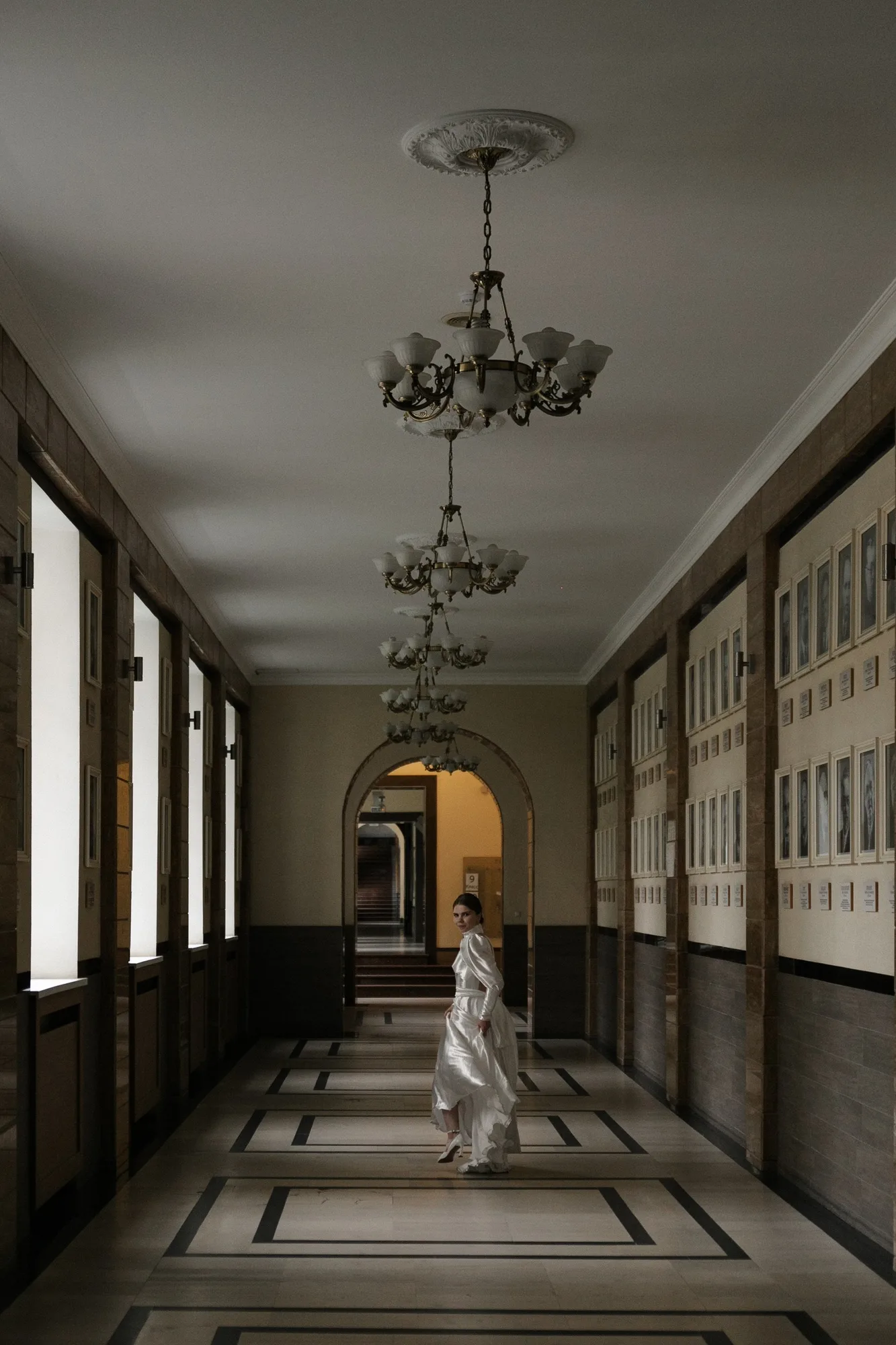
You do not need to arrive with poses. Tell me before the wedding that extended directed photography makes you uncomfortable. I can make small corrections to position, hands or posture, then work from movement and the interaction already present.
Useful direction may be as simple as:
- walk together at a natural pace;
- stand closer and look at one another rather than at the camera;
- adjust clothing while continuing the conversation;
- pause in better light without changing the emotion;
- repeat a movement only when the first attempt was interrupted technically, not to manufacture a reaction.
I still make several classic portraits. Documentary photography does not mean refusing to help or never looking at the camera. It means that formal photographs occupy a clear part of the day while the rest of the wedding is allowed to happen.
Final planning checklist
Before the final timeline is approved:
- Reserve 60–90 minutes in total, then divide it into useful sections.
- Decide whether a first look is part of the experience or only a scheduling device.
- Choose one main portrait area close to the real route.
- Allow 20–40 minutes and prepare an ordered group list.
- Ask one helper from each family to gather people.
- Check sunset, venue orientation and shade at the proposed time.
- Keep an indoor or sheltered location available.
- Decide which real event takes priority if the schedule slips.
- Treat Pinterest as a language for taste, not a list to reproduce.
- Tell the photographer how much direction feels comfortable.
Share the draft schedule, ceremony time, family list and venue addresses through the contact page. I will help distribute the portrait time so the gallery is complete without turning the wedding into one continuous photo session.