
First Look or Ceremony Reveal: Choosing Your Wedding Timeline
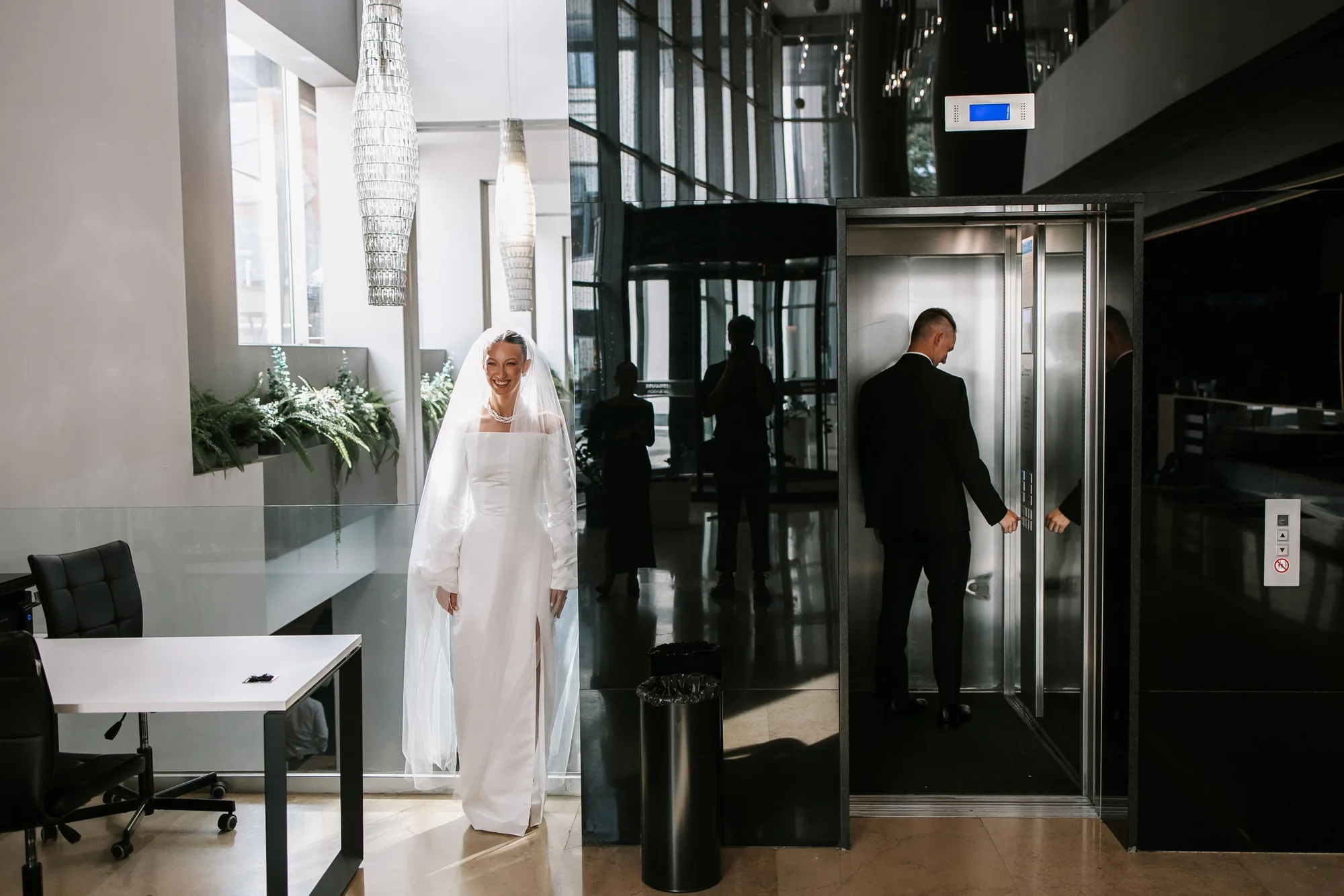
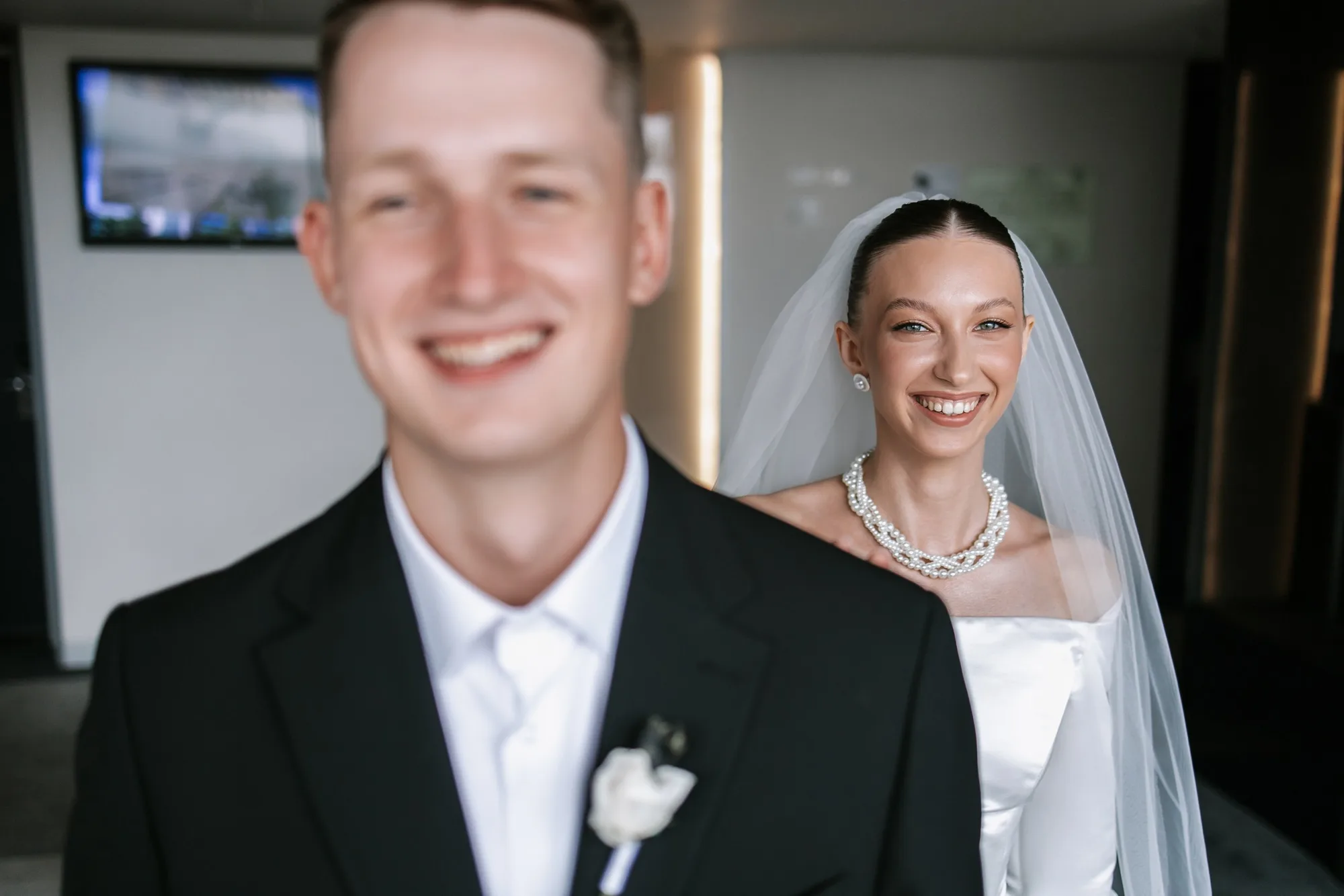
A first look is an arranged meeting before the ceremony. It can make room for portraits earlier in the day, but it also brings the getting-ready deadline forward. Choose whether you want that private meeting first; then build a schedule that supports the decision.
Start with the experience you want
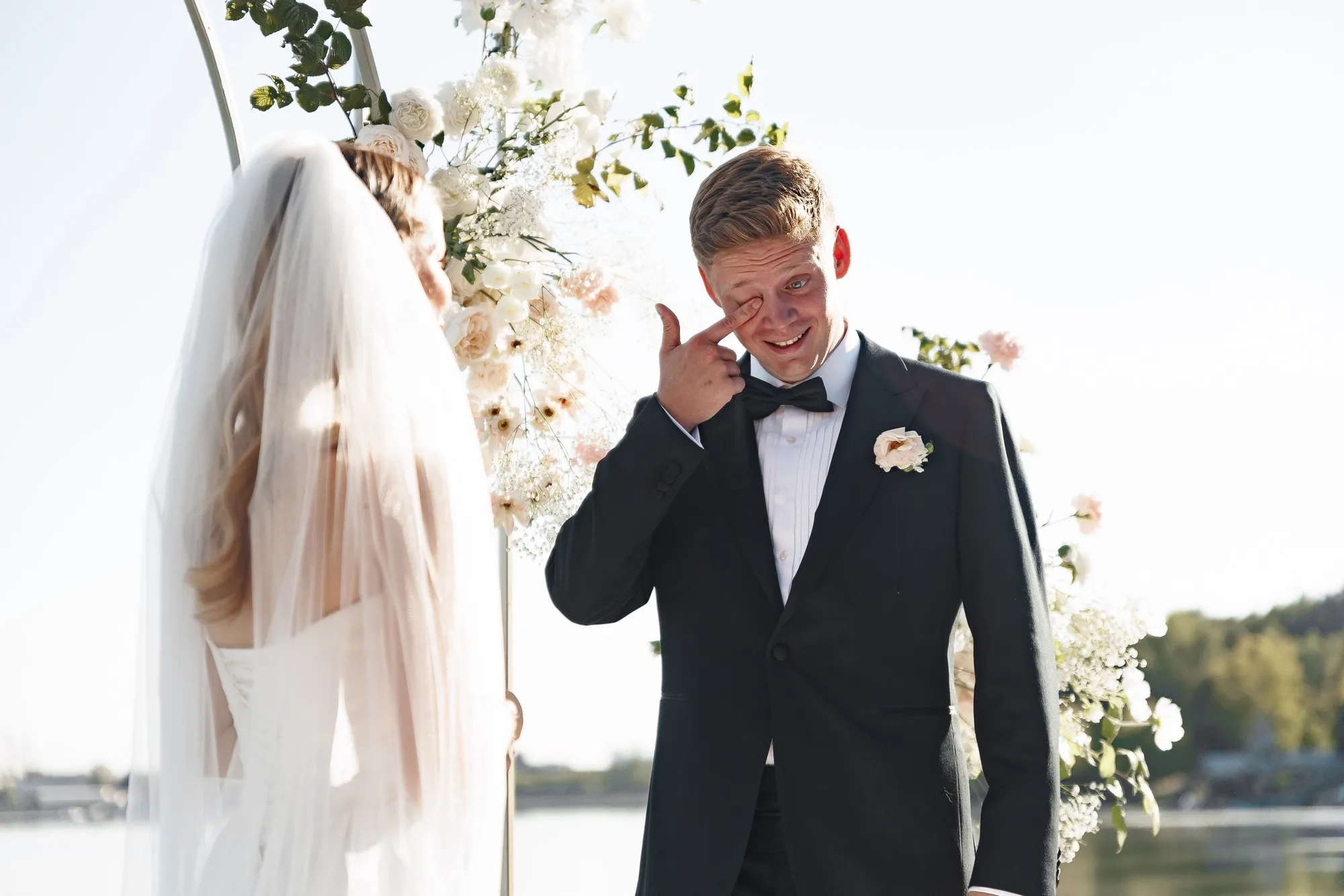
A private meeting and an entrance in front of your guests are different experiences. Neither guarantees a stronger reaction or better photographs. Talk about whether you want time together before the ceremony, whether a particular tradition matters, and how comfortable you feel being photographed during that meeting.
You can also get ready together, meet without a staged reveal, or spend a quiet moment together without seeing each other. There is no need to choose a familiar photo format if it does not feel like you.
What changes in the timetable?
| Decision | What to arrange before the ceremony | What remains afterwards |
|---|---|---|
| First look and couple portraits | Both partners ready, a private location, the meeting and portrait time | Congratulations, any remaining family groups and time with guests |
| First meeting at the ceremony | Separate preparations and individual photographs if wanted | Congratulations, couple portraits and family groups |
| Get ready together | Space for both partners and the people helping them | The ceremony and whichever portraits have not already happened |
A first look moves some photography earlier; it does not make those photographs take no time. Include getting dressed, the walk to the meeting point and a pause before guests arrive. Family photographs can only happen beforehand if the people involved are ready and present too.
Keep the meeting separate from the portrait session
Agree who will be nearby and where the photographer can stand. Tell the team whether you want a little time alone afterwards. The meeting does not need to lead immediately into instructions, a pose list or a gathering of onlookers.
Choose somewhere you can reach easily in your wedding clothes. A quiet room or garden corner near preparations may work better than a distant viewpoint. Ask who can keep the space clear and what happens if it rains. Privacy is an arrangement to make with the venue, not something the photograph can guarantee.
Compare two possible sequences
With a first look: finish preparations → meet privately → take the agreed couple portraits → pause and prepare for the ceremony → ceremony → congratulations → remaining family groups.
Without a first look: finish separate preparations → ceremony → congratulations → priority family groups → nearby couple portraits → join the reception.
These are sequences, not measured schedules. Add real transfer and preparation times before attaching clock times. If you want family groups before the ceremony, give relatives a specific arrival instruction rather than simply sending the ceremony time.
What if preparations run late?
Decide in advance what can become shorter or move. It may be better to keep the private meeting and move most portraits until later, rather than rush both and arrive at the ceremony unsettled. Avoid treating the ceremony start time as a flexible buffer without discussing it with the coordinator.
For a ceremony close to sunset, consider the remaining daylight carefully. An earlier meeting can create a portrait opportunity, but it is not the only solution: an indoor or evening session is another choice. Read the sunset ceremony guide before fixing the sequence.
Five decisions to share with your team
- Whether you want to see each other before the ceremony.
- Who may be present during the meeting.
- The exact meeting place and a sheltered alternative.
- Which portraits or family groups should follow it.
- What moves if getting ready takes longer than expected.
Then place those decisions in your wedding photography timeline. The photo planner can help with a walk after the ceremony; it does not schedule a first look before it.