
Film vs Digital Wedding Photography
For most weddings, digital photography is the dependable foundation: it handles fast action, changing light and the complete sequence of the day. Film is best used selectively for portraits, details and slower scenes where its colour, texture and highlight response add something distinctive. A hybrid approach keeps the security and coverage of digital while adding a smaller set of genuinely analogue photographs.
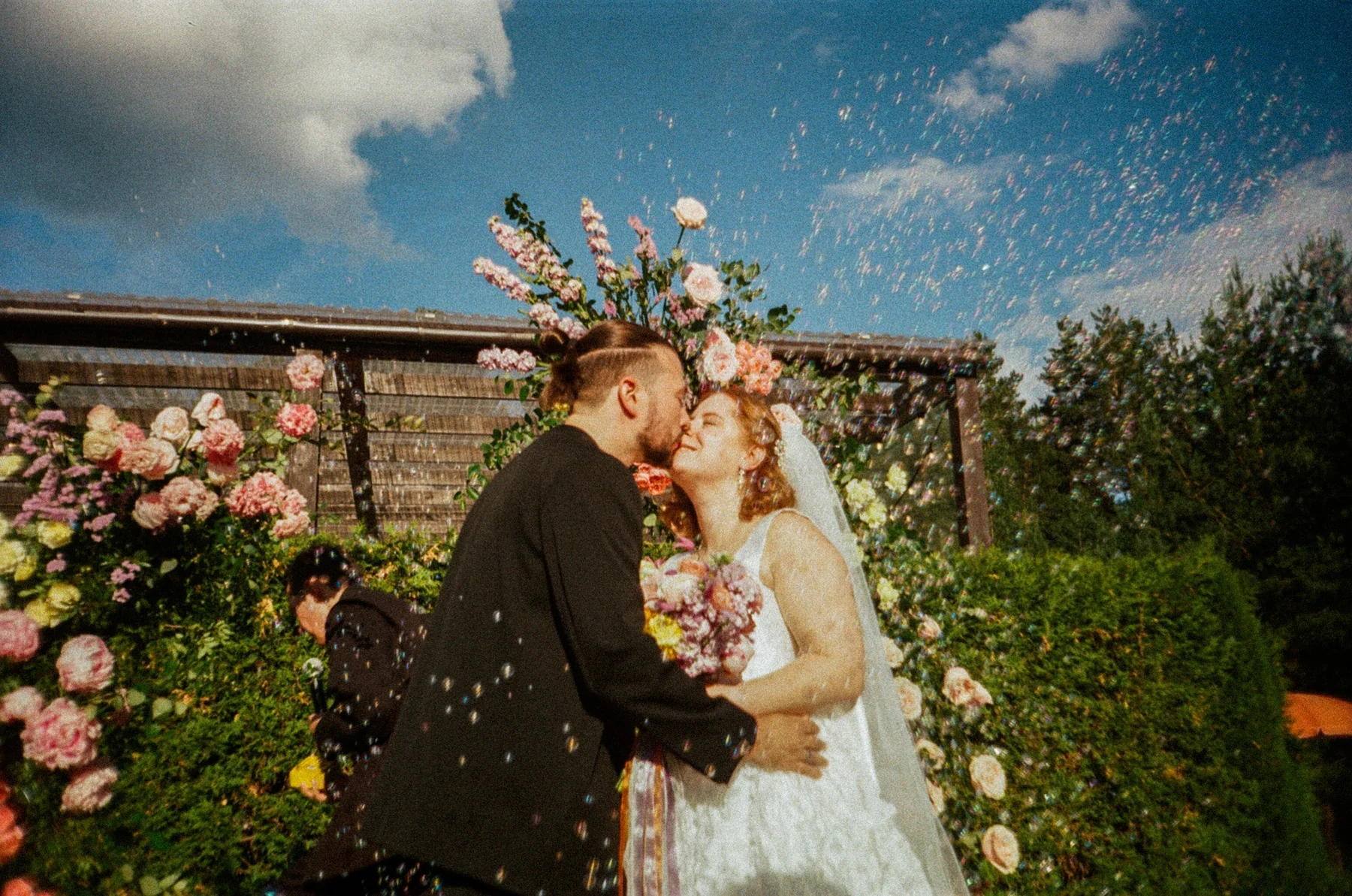
The short answer: digital is the foundation, film is the accent
I do not treat film and digital as rival aesthetics. They are different tools. Digital lets me follow a wedding continuously from preparations to the dance floor, respond immediately to changing light and make several frames when a moment cannot be repeated. Film asks for a slower decision. I use it when the light, colour and pace of a scene justify that decision.
For a full wedding, my practical recommendation is digital coverage with film added deliberately. The couple still receives a coherent account of the day, while the analogue frames bring another material quality to selected portraits, details and quieter transitions.
How film and digital actually differ
The visible result depends on more than the camera. Film stock, exposure, processing and scanning all affect an analogue photograph. Digital colour also depends on the sensor, light and final edit. Even so, the working differences are real and important on a wedding day.
| Decision | Digital | Film |
|---|---|---|
| Fast, unrepeatable moments | Suited to short sequences and immediate adjustment | Rewards anticipation and a more selective pace |
| Dark receptions | More flexible at high ISO and with changing artificial light | Possible with flash, but less forgiving and usually used selectively |
| Natural-light portraits | Precise, consistent and easy to match across a gallery | Distinct grain, colour response and softer transitions when exposed well |
| Checking the result | Exposure and focus can be reviewed immediately | The result remains unseen until development and scanning |
| Delivery workflow | Files move directly into backup and editing | Requires laboratory processing and high-resolution scanning |
| Cost | Included in the main digital workflow | Adds film stock, processing and scanning costs |
The same ceremony, two different tools
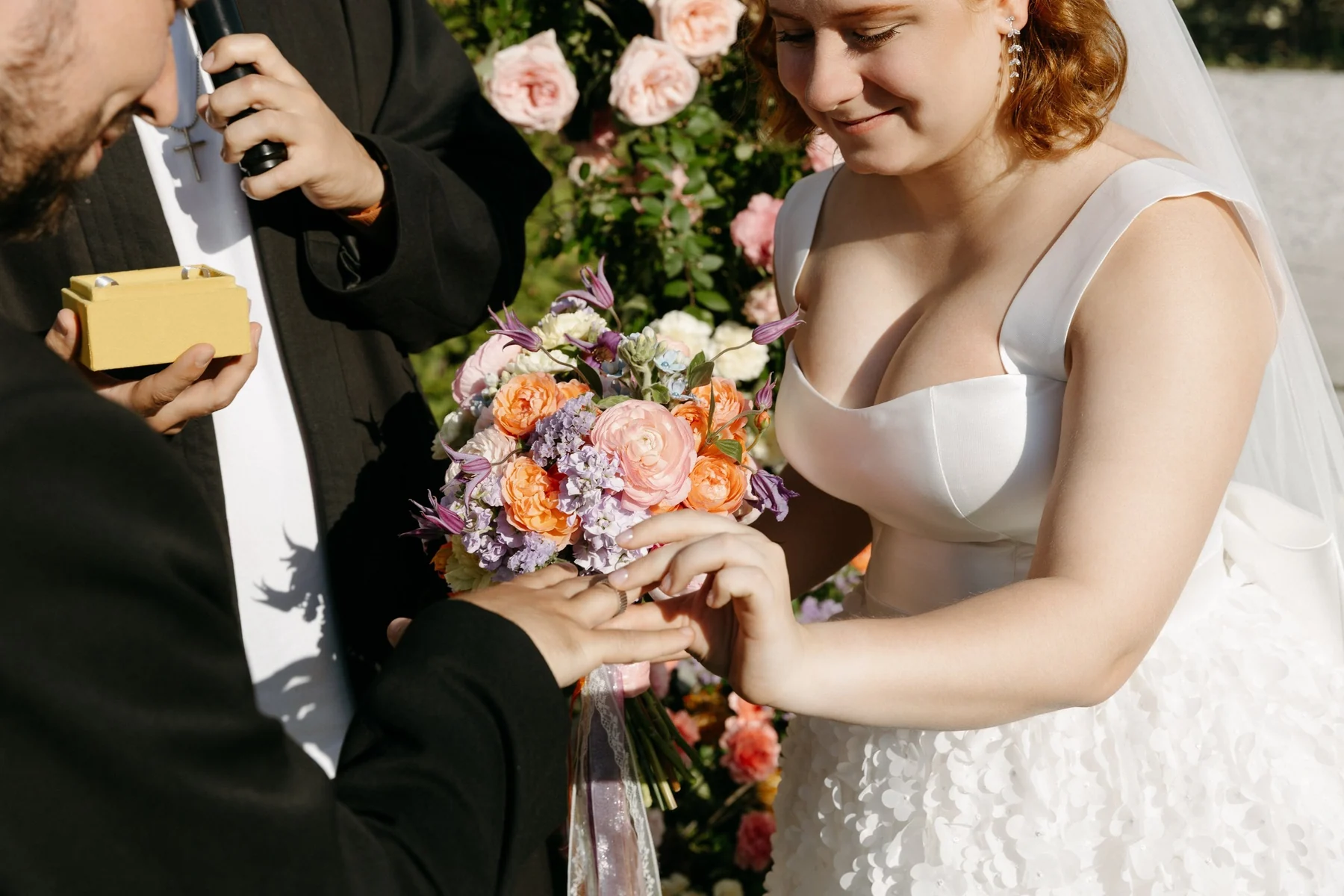
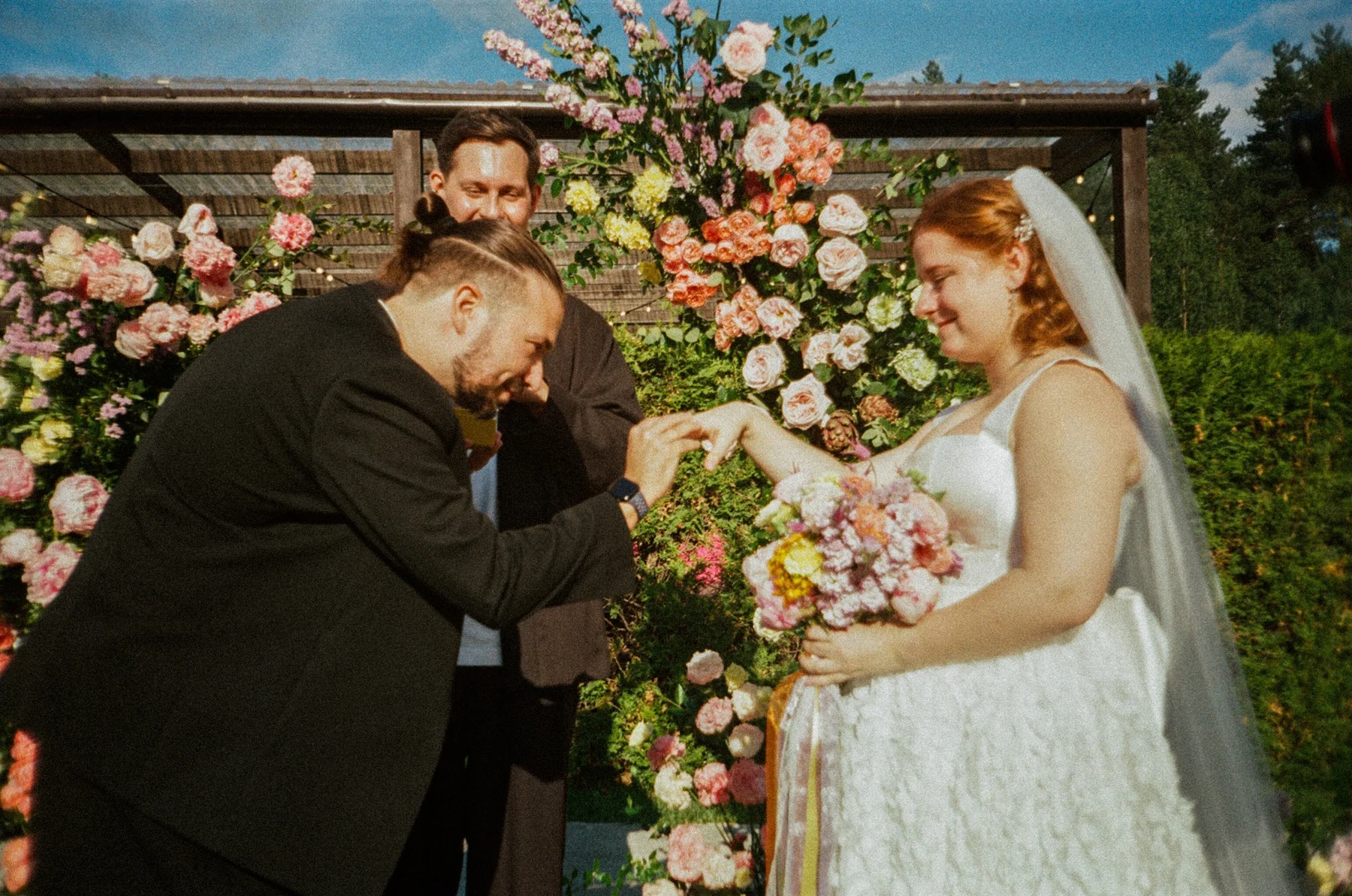
These photographs come from the same real wedding. The digital frame records the ring exchange with clean detail and dependable timing. The film frame carries its own grain and colour response. One is not a substitute for the other; together they show why the choice is about purpose rather than a fashionable label.
When film adds the most
Film is strongest when I have enough light and enough time to make a considered frame. Window light during preparations, a portrait after the ceremony, flowers and fabric in daylight, or a quiet dinner before the room becomes dark are natural opportunities. Colour negative film can hold bright areas with a gentle transition when it is exposed and scanned well, which is useful around white clothing, skin and open sky.
I am not trying to manufacture a generic retro effect. The value is in the physical negative and the way a particular stock records the scene. Grain, slight variations and the need to commit before seeing the result are part of the medium, not defects to be removed later.
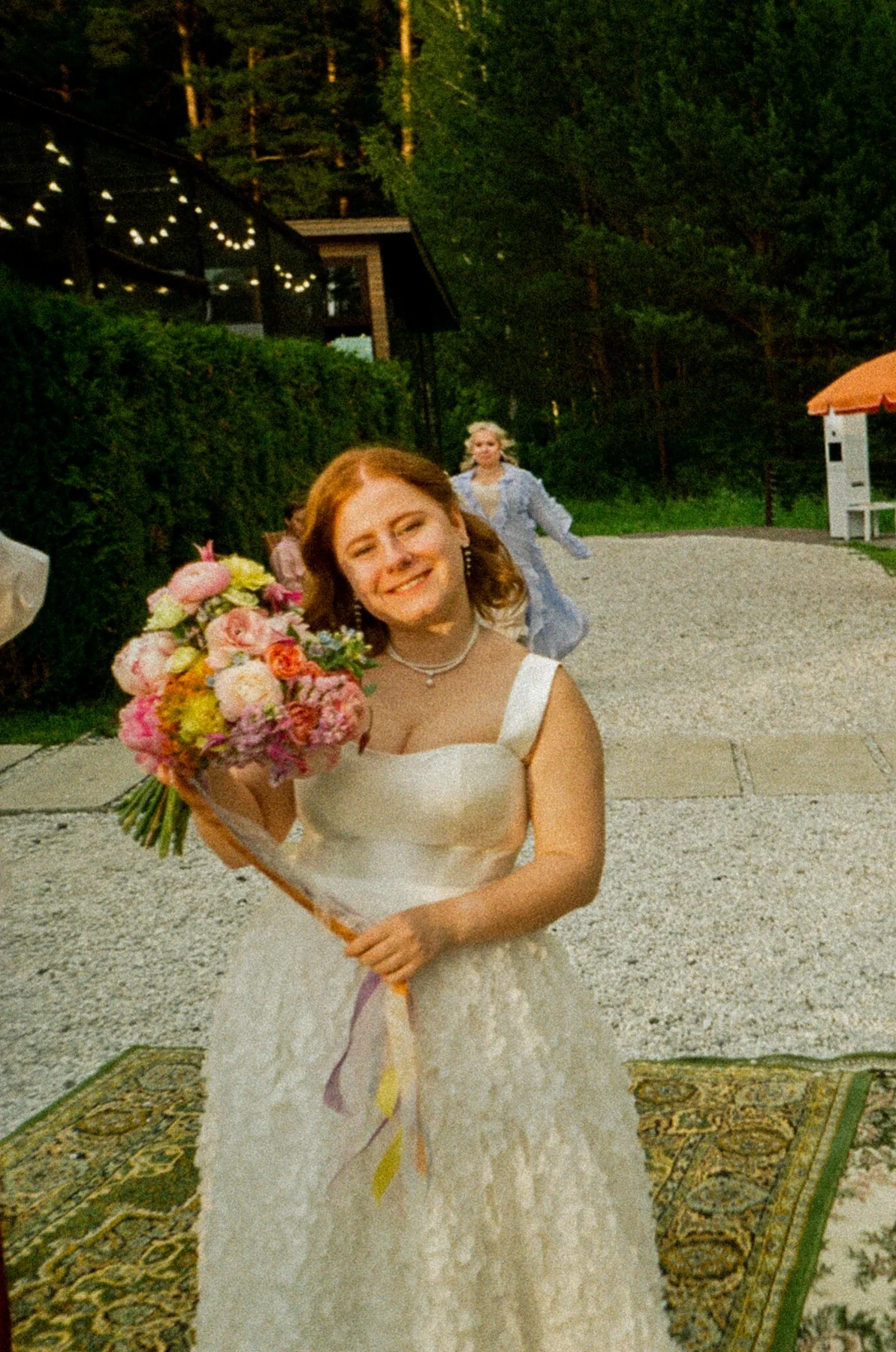
Film makes sense when you can point to actual analogue photographs and explain what you prefer about them. If the attraction is only the word “film”, a consistent digital gallery may serve you better.
When digital is the better tool
Digital carries the documentary responsibility of the wedding. A ceremony moves at its own pace. Reactions happen in several places at once. Dinner rooms become darker, speeches overlap with service, and the dance floor changes colour from one second to the next. In these situations I need speed, autofocus, high-ISO flexibility and immediate exposure checks.
That does not make digital photographs clinical. Light, timing, distance and editing matter more than the mere presence of a sensor. Digital can remain quiet, atmospheric and expressive while giving me the technical margin required to protect an unrepeatable story.
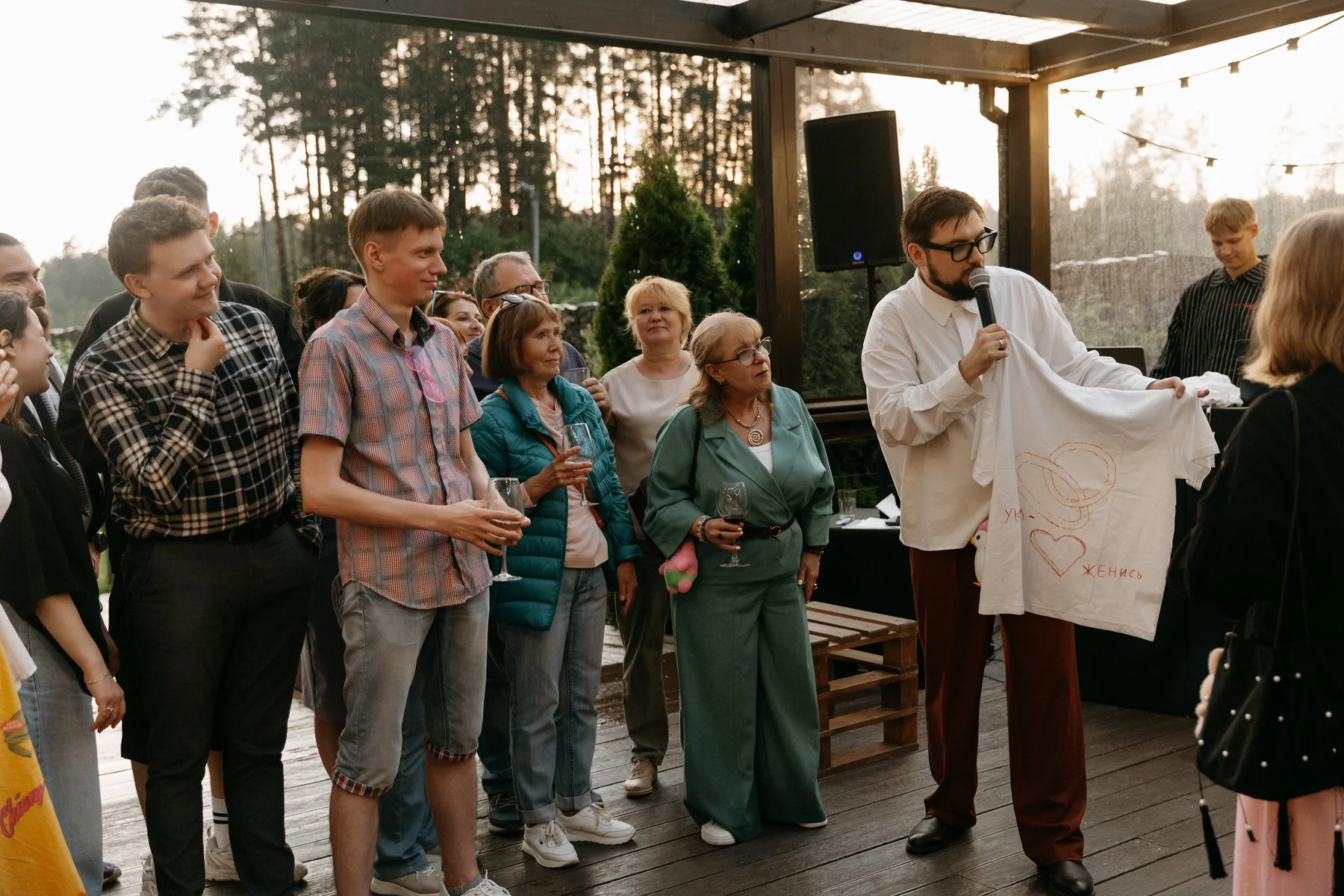
Digital is also the practical choice if you need one consistent medium, expect much of the celebration to happen in low light, or do not want laboratory processing included in the schedule and budget.
How I use film and digital together
I keep digital cameras working from the beginning of coverage to the end. Film sits inside that complete workflow rather than replacing it. I may switch to it for a portrait, a ceremony detail or a scene where the light and colour are especially suitable, then return to digital as the pace changes.
There is no separate half-hour performance called “the film session”. The aim is to preserve the experience of the wedding. The couple should not have to repeat an emotional moment simply because I chose a different camera.
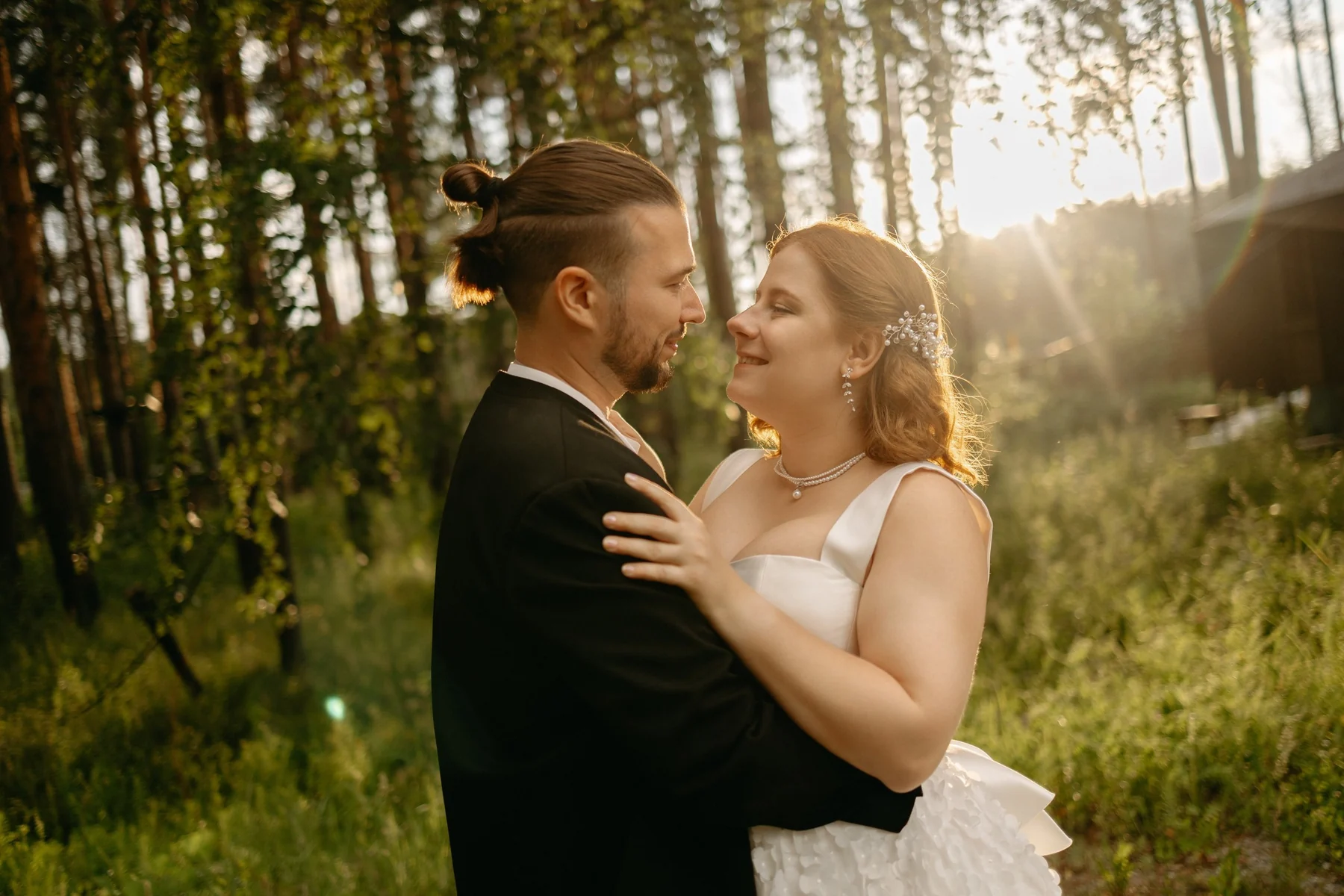
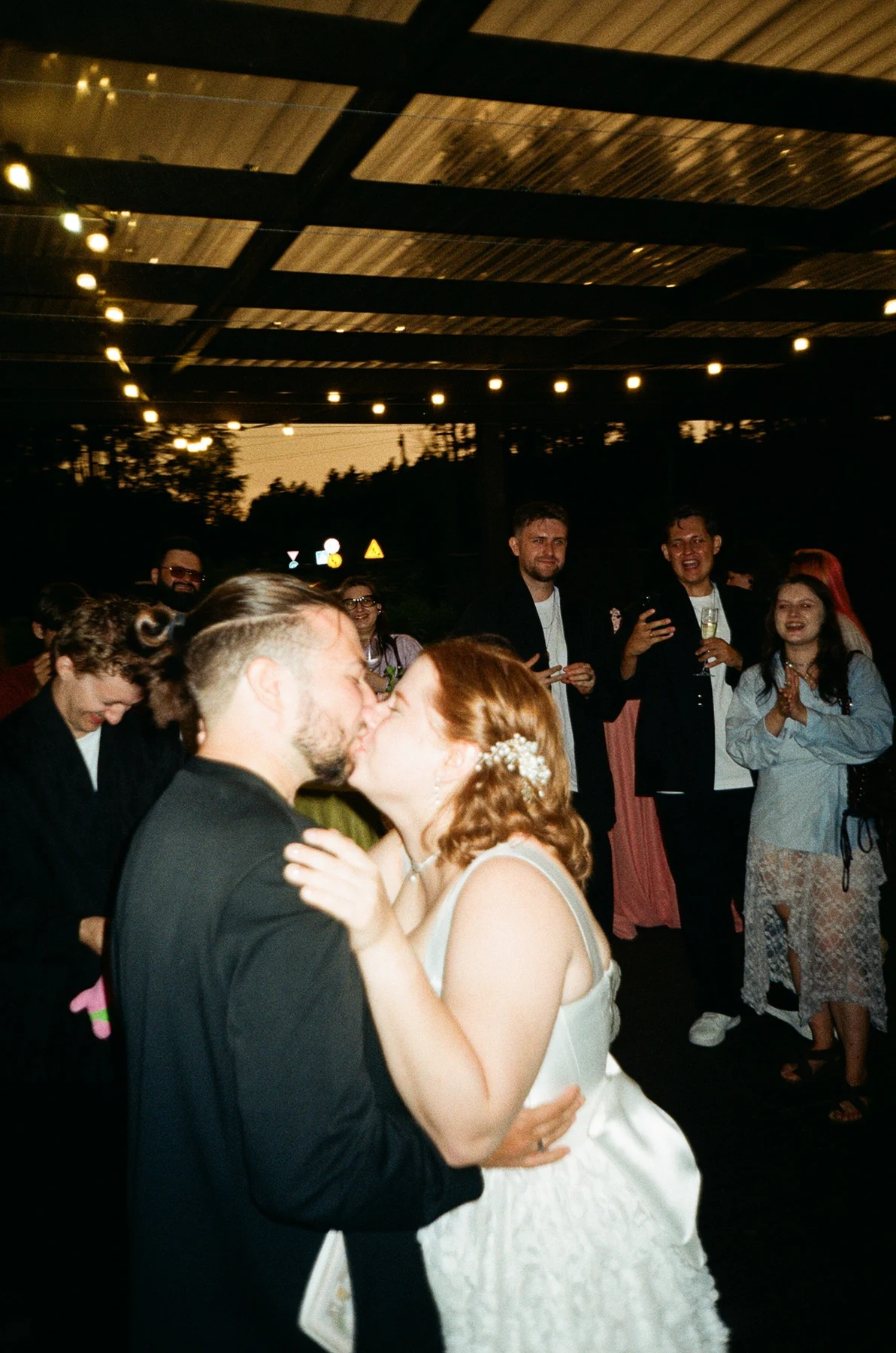
Film coverage costs US$100 for 72 exposed frames, including development and scanning. The number of usable scans can differ from the number of exposed frames. Film is additional to the complete digital coverage. What matters more than a headline number is where film will genuinely contribute to your day. See the photograph quantities and delivery guide for the complete handover terms.
Which option should you choose?
Choose digital-only coverage when you want the simplest workflow, much of the wedding will happen in dark interiors, the schedule is fast, or a consistent complete gallery matters more than using a particular medium.
Choose a hybrid film and digital approach when analogue photographs are already part of your visual references, the day includes good natural light, and you value a smaller layer of distinctive frames alongside full digital coverage.
Before booking, ask three practical questions:
- Is film additional to complete digital coverage, or does it replace part of it?
- Can you see real film scans and a complete wedding gallery, not only social-media highlights?
- Are the number of rolls, processing, scanning, delivery and negative storage explained in writing?
The medium should support the wedding rather than control it. Start with the photographs you want to live with, then choose the combination of tools that can produce them reliably.