
How to Plan Wedding Photography for Rain and Bad Weather
Light rain can become part of the wedding story. Heavy rain is different: protecting the couple, clothing, hair and equipment matters more than forcing an outdoor portrait session. The useful plan is 30–60 minutes of flexibility, covered movement and a realistic indoor alternative.
The short answer
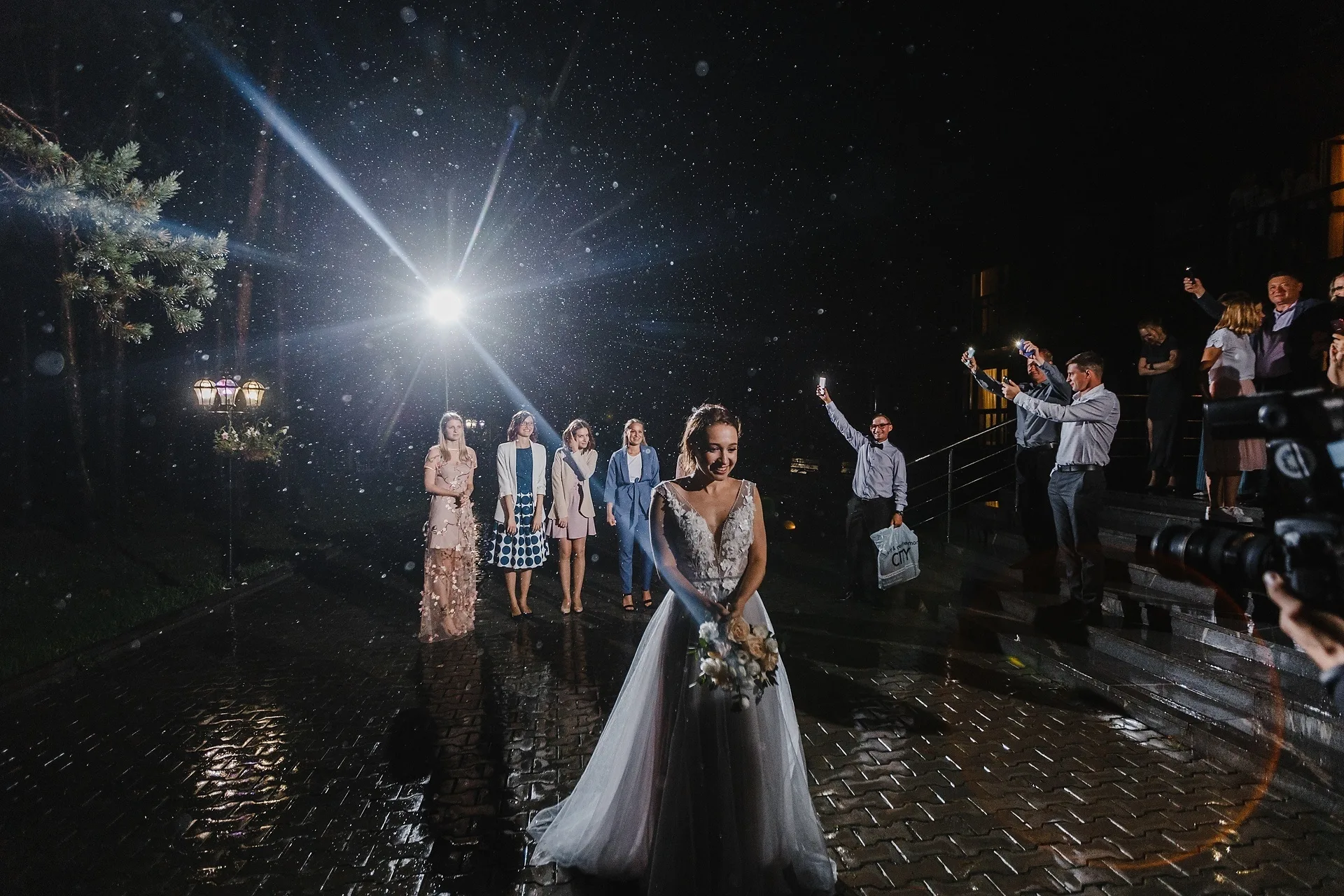
Light rain does not have to stop wedding photography. If the couple is comfortable and we can protect clothing, hair and equipment, I continue working and let the weather become part of the real story.
Heavy rain needs a different decision. Forcing a long outdoor session has little value when the couple will be soaked, the dress and hairstyle may be damaged and the equipment cannot be exposed indefinitely. A useful rain plan combines 30–60 minutes of schedule flexibility, a covered route, umbrellas, spare shoes and an indoor alternative.
Light rain and heavy rain are different
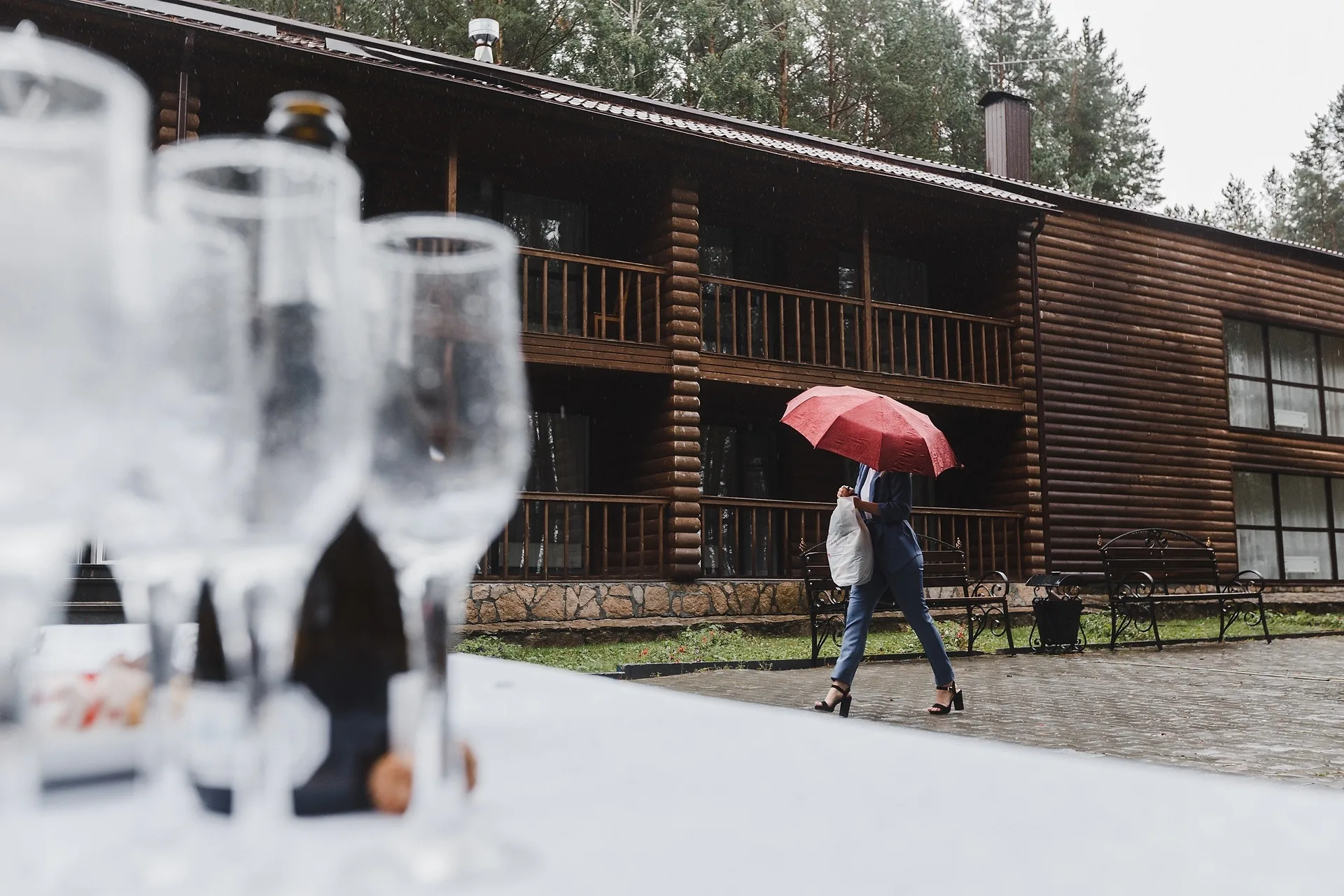
A short shower, drizzle and sustained heavy rain are not the same working condition. Light rain can add reflections, movement and atmosphere without taking the couple out of their day. Portraits can be brief, and documentary coverage can continue as people move under umbrellas or between covered spaces.
In heavy rain, the practical consequences matter more than the visual idea. If the couple becomes wet before the ceremony, the effect continues for the rest of the day. Wind can also make umbrellas unsafe or ineffective. The right response may be to wait, change the order of events or move indoors.
No photograph is worth making the couple uncomfortable or damaging clothing and equipment. The rain plan should preserve choices rather than insist that the original outdoor schedule must happen unchanged.
Build 30–60 minutes of flexibility
Allow approximately half an hour to one hour that can absorb a shower or a slower transfer. This does not mean leaving an empty hour in the printed programme. It means avoiding a timeline where every event begins immediately after the previous one and a ten-minute delay removes the portrait session or guest photographs.
The right amount depends on:
- the season and normal weather pattern for the region;
- how quickly conditions change in that specific city or landscape;
- the distance between preparation, ceremony and reception locations;
- whether people can move under cover;
- how much of the plan depends on one outdoor viewpoint;
- the latest time at which the venue must decide between outdoor and indoor setups.
Spring and autumn often justify more flexibility than a stable summer period, but the actual local forecast matters more than a general rule. Review the plan with the planner and venue close to the date instead of rebuilding the wedding around a long-range weather prediction.
Prepare a covered route
An indoor backup is useful only when it can actually hold the ceremony or portraits. Confirm its capacity, background, available light and the time needed for the venue team to change the setup.
For photography, identify three things:
- A covered place near the main event for family groups or a short portrait sequence.
- A route that keeps the couple dry between the car, preparation room, ceremony and reception.
- A short outdoor option that can be used quickly if the rain pauses.
This is usually more effective than planning a long drive to a famous indoor location. The objective is to keep the couple present at their wedding and use the available dry window efficiently.
The destination wedding timeline guide explains how transfers and buffers fit around the ceremony and dinner.
What to pack
A practical wet-weather kit can include:
- enough umbrellas for the couple and essential members of the wedding party;
- spare shoes suitable for wet ground;
- a coat, cape or other cover for moving between locations;
- towels and a place to leave wet items;
- covered transport that can stop close to each entrance;
- a small repair kit coordinated with the stylist or planner.
Transparent umbrellas can be useful for photographs, but they are not mandatory. Stability, size and protection are more important than buying an accessory only because it appears in wedding inspiration photographs.
Who makes the weather decision
Agree before the wedding who can move the ceremony indoors and at what time that decision must be made. The couple, planner and venue need a shared process because the choice affects guests, furniture, sound, catering and safety.
I can advise on light, useful dry windows and the time needed for photographs. I do not make the event decision alone. Once the plan is agreed, I adapt coverage to what is actually happening rather than repeatedly separating the couple from their guests to recover an abandoned shot list.
Rain can give a wedding visual character, as it did in Nikita and Nastya’s complete story. The aim is not to pretend bad weather is always romantic. It is to protect the people first, preserve enough flexibility and make honest photographs of the day that really happened.