
Is Welcome Dinner Photography Worth Adding?
For a destination wedding, a welcome dinner is often the first real chapter of the celebration: families meet, friends arrive from different places and the couple can spend time with guests before the formal wedding schedule. About two hours is usually enough to establish the setting, make useful portraits and document the beginning of dinner without turning the evening into another full wedding day.
The short answer
For most destination weddings with a real hosted welcome event, photography is worth adding. The dinner may be the first time both families occupy the same room, the first meeting between friendship groups and the couple’s best opportunity to speak with guests without the pressure of the ceremony timeline.
I usually plan approximately 2 hours. That is enough to show where the event happened, who arrived, how people met, several intentional portraits and the beginning of dinner. It creates a complete opening chapter without making the night before the wedding feel like a second full production.
The strongest reason to photograph a welcome dinner is not decoration. It is that relationships begin before the wedding day.
Why the evening matters
Destination guests often arrive with separate histories. The couple may have university friends, relatives from different countries, colleagues and people who know only one partner. On the wedding day, ceremony times and formal events control attention. The welcome dinner gives those people space to become one group.
Photographs can preserve:
- parents meeting friends they have heard about for years;
- relatives seeing the couple after a long journey;
- children becoming comfortable with the venue and other guests;
- informal speeches that are not repeated at the reception;
- the couple speaking with people individually;
- the atmosphere of the destination before formal clothing and ceremony structure change it.
This context also makes the main wedding gallery easier to understand. Viewers recognise faces and relationships instead of encountering every guest for the first time during the ceremony.
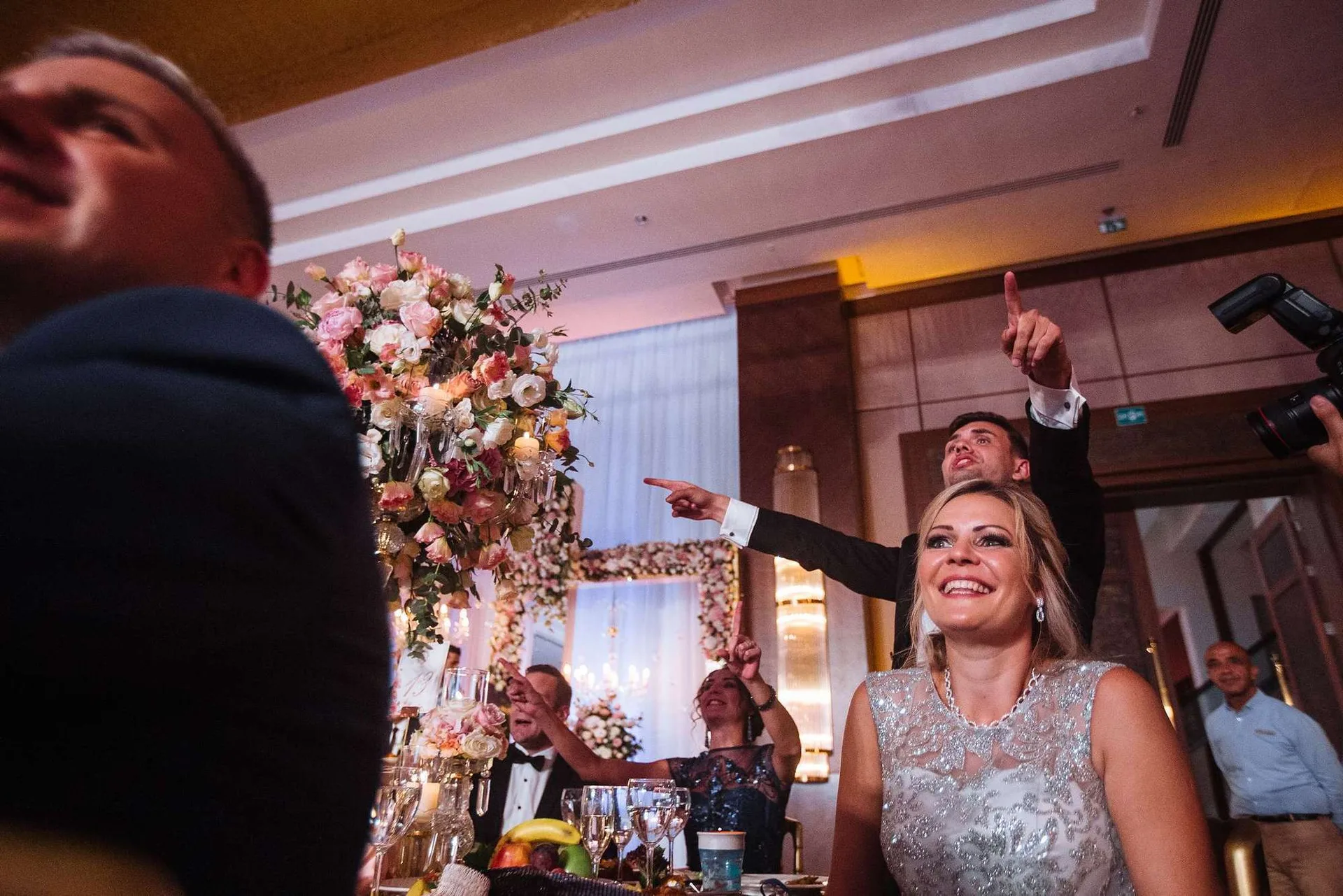
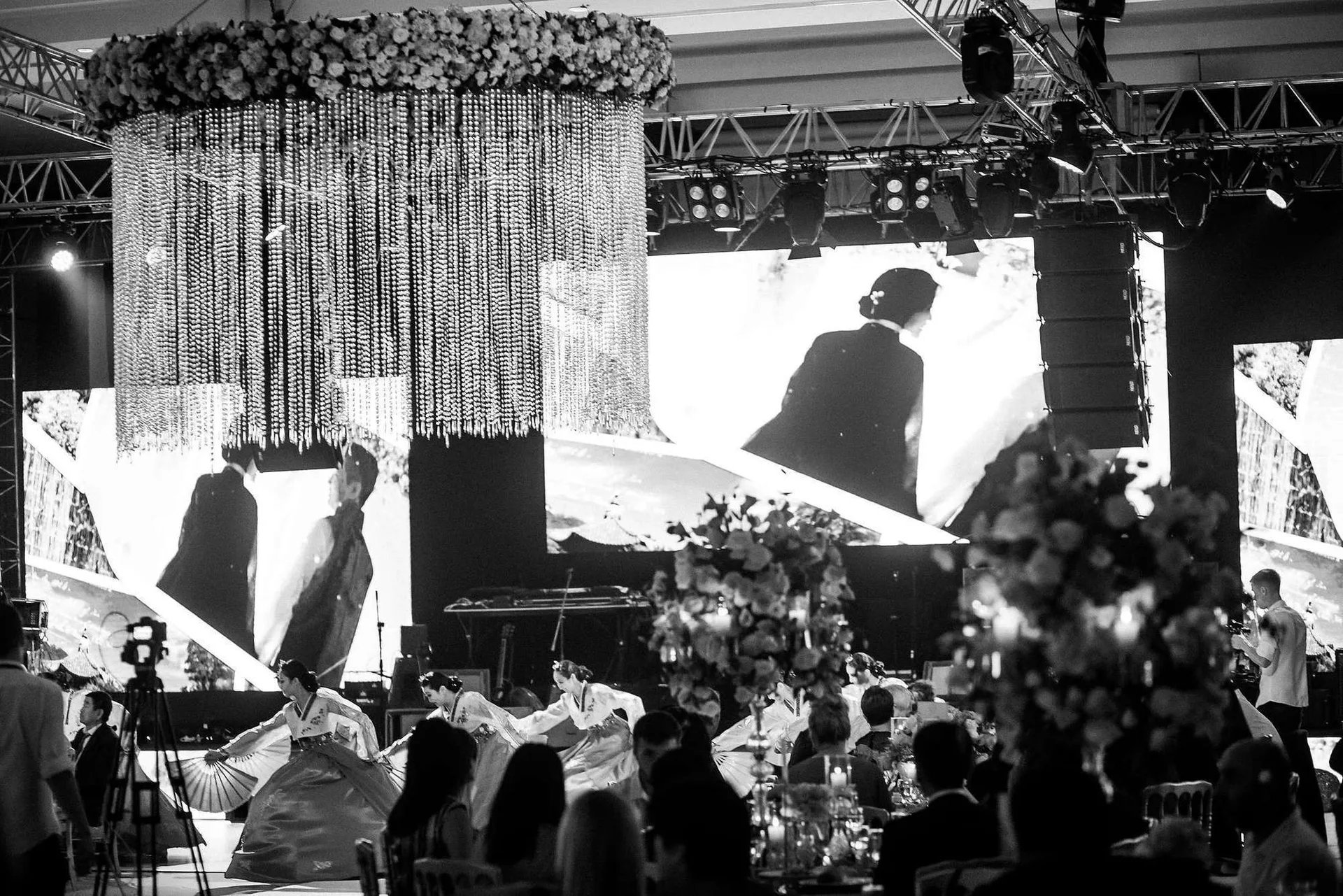
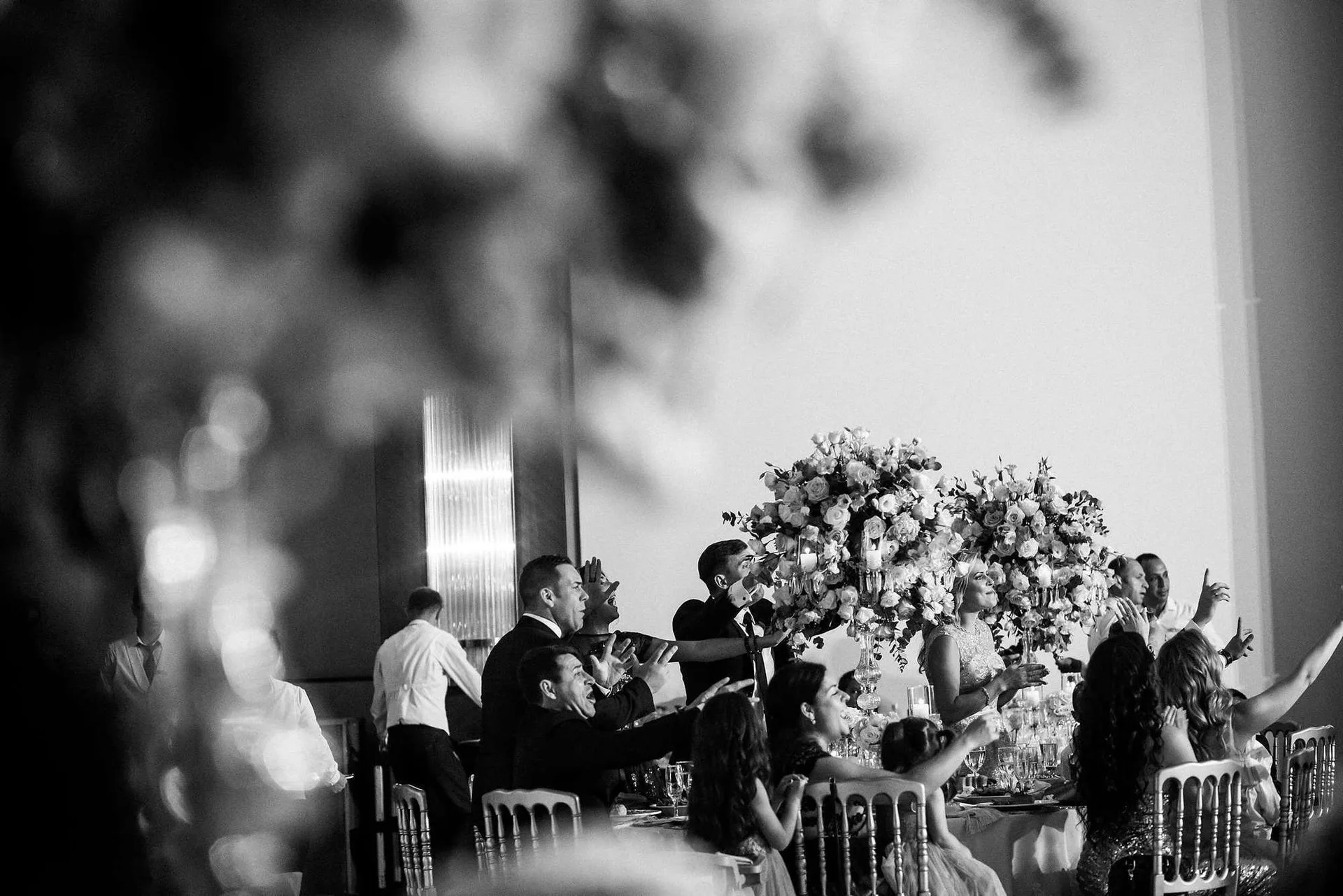
The photographs above come from the reception of a complete destination wedding, not a separate welcome dinner. They illustrate the same photographic priorities: guest relationships, the room, reactions and the way an evening programme changes the atmosphere.
What two hours can cover
A useful two-hour schedule begins before everybody is seated and ends after the dinner has found its rhythm.
| Time | Coverage | Result |
|---|---|---|
| 18:00–18:15 | Empty or nearly ready setting | A concise record of the location, tables and light |
| 18:15–18:45 | Guest arrivals | Greetings, introductions and movement into the event |
| 18:45–19:10 | Couple and group portraits | Immediate family, friends and people who may be difficult to gather later |
| 19:10–19:40 | Drinks and conversation | Documentary photographs before everyone remains seated |
| 19:40–20:00 | Dinner opening or toast | A clear conclusion to the gallery chapter |
The exact order can change. If the best natural light lasts only at the beginning, make portraits before the formal welcome. If several guests arrive late, do not delay the complete dinner simply to finish a list; photograph them naturally and make the missing combinations when the room settles.
Two hours is not enough when the couple expects photography of a complete multi-course dinner, several speeches, live performance and a party. In that case, choose the final event that matters and work backwards to determine the start time.
Portraits and documentary coverage
There is no useful rule that a welcome dinner must be entirely candid. Documentary work and portraits serve different purposes.
Make the portraits that become harder tomorrow
The evening can be an efficient time to photograph:
- the couple with parents and grandparents;
- each family before formal wedding-day pressure begins;
- groups of friends who travelled together;
- relaxed portraits of the couple in a second outfit;
- guests who may leave before the end of the wedding reception.
These should be concise. The objective is not to create another hour-long couple session. It is to use a relaxed gathering to preserve people who matter.
Let the event continue
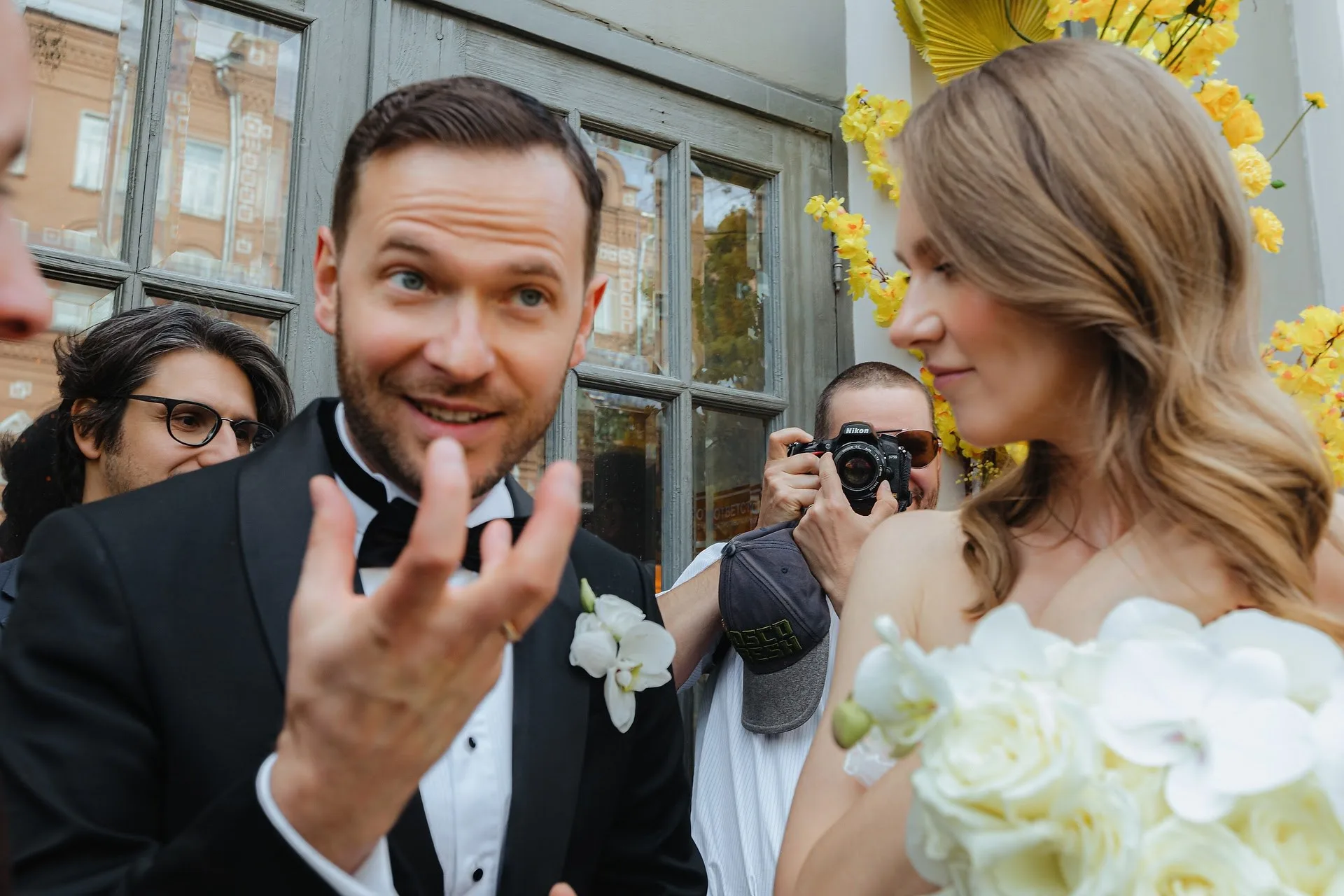
Once guests begin interacting, I work primarily as a documentary photographer. Introductions, gestures, toasts and the changing energy of the table cannot be organised afterwards. I may adjust where the couple stands for a short group, but I do not direct every conversation or ask people to repeat reactions.
When to extend or simplify coverage
Extend beyond two hours when
- a formal speech begins later in the dinner;
- the couple has planned live music, performance or dancing;
- guests arrive in several waves;
- the event uses more than one space;
- the welcome evening has its own ceremony or cultural tradition;
- the couple considers the party as important as the main wedding reception.
Keep the coverage compact when
- the dinner is intended to preserve energy before an early wedding morning;
- the meaningful part is arrival and introduction rather than a late programme;
- the event is in one restaurant and everyone sits for a long meal;
- no formal event will happen after the opening toast.
Skip or rethink coverage when
The “welcome dinner” is actually an unstructured meal at which guests come and go independently, the couple will not be present for most of it, or photographing it would remove budget from a more important part of the wedding. Even then, a short arrival session may be more useful than several hours of continuous coverage.
One or two photographers
One photographer is normally enough for a two-hour welcome dinner in one location. The event is smaller and less formally divided than the main wedding day, and one person can move between portraits, arrivals and table interactions without creating a large production around the guests.
A second photographer becomes relevant only when there is a specific conflict:
- a very large guest list arriving through several areas;
- simultaneous private family events and a public cocktail hour;
- two distant spaces active at the same time;
- an important performance and reactions that cannot be covered from one position.
The decision should solve that problem. A second photographer is not automatically part of Multi-Day coverage. Current additional coverage is €500 per project, with travel quoted separately, and should be discussed when the main booking is made.
Separate booking or Multi-Day coverage
A welcome dinner can be added separately to a Full Day collection or included within Multi-Day coverage. Multi-Day is usually clearer when several events surround the wedding: rehearsal, welcome dinner, main day and brunch. A separate addition may be simpler when the wedding consists only of one short dinner and one complete wedding day.
In both cases, the proposal should specify:
- The date and local start and finish times.
- The exact venue and any second location.
- Whether portraits are expected before guests sit down.
- The planned toast, speech or performance that determines the finish.
- Travel and accommodation where applicable.
- Whether the photographs join one gallery or a multi-day folder structure.
For Multi-Day work, One online gallery with a separate folder for each day. The current collection begins at €9,500 and is quoted around the actual events.
Planning checklist
Send the photographer and planner:
- the guest count and arrival pattern;
- the names of both sets of parents and other essential groups;
- the time the couple will arrive;
- the portrait priority list;
- the start of dinner and any toast;
- the lighting plan after sunset;
- the final event that must be photographed;
- permission and access information for the venue.
Keep the atmosphere different from the wedding day. The welcome dinner can be looser, shorter and more conversational. Its photographs should add a chapter, not duplicate the ceremony and reception that follow. To include it in a proposal, send the date, venue and draft schedule through the contact page.